Governing Climate Risk

For years, climate risk has been treated as an analytical problem rather than an operational one. Organizations modeled scenarios, published maps, and delivered periodic assessments, assuming uncertainty could be managed with better forecasts and more data. That assumption no longer holds. Climate volatility is now fast, uneven, and consequential enough to interfere directly with how infrastructure, territory, and capital are operated in Europe. The challenge is no longer understanding climate risk in theory, but governing it in practice.
The scale of the problem in Europe is stark. From 1980 to 2024, weather and climate related extremes such as floods, storms, heatwaves, droughts, and wildfires have caused cumulative economic losses of approximately €822 billion across the European Union and associated countries, according to the European Environment Agency. Hydrological hazards, predominantly floods, account for nearly half of that total, with meteorological events such as storms and hail contributing another significant share.
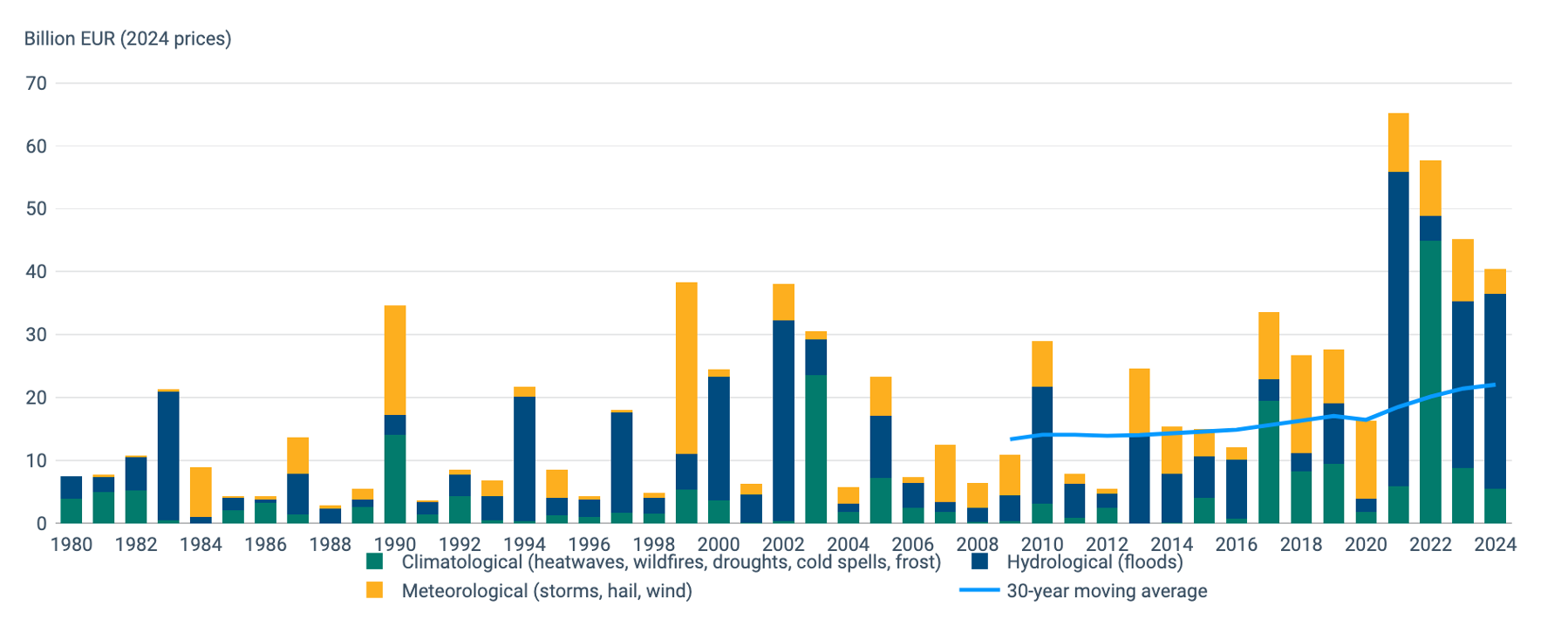
Recent years have been especially costly. Between 2020 and 2023, average annual economic losses in the EU associated with increasingly intense heat, floods, and other extremes reached around €44.5 billion annualy, more than two and a half times the average of the previous decade. Projections suggest that without changes in how risk is managed, cumulative losses from extreme weather events could exceed €120 billion over the second half of the 2020s alone.
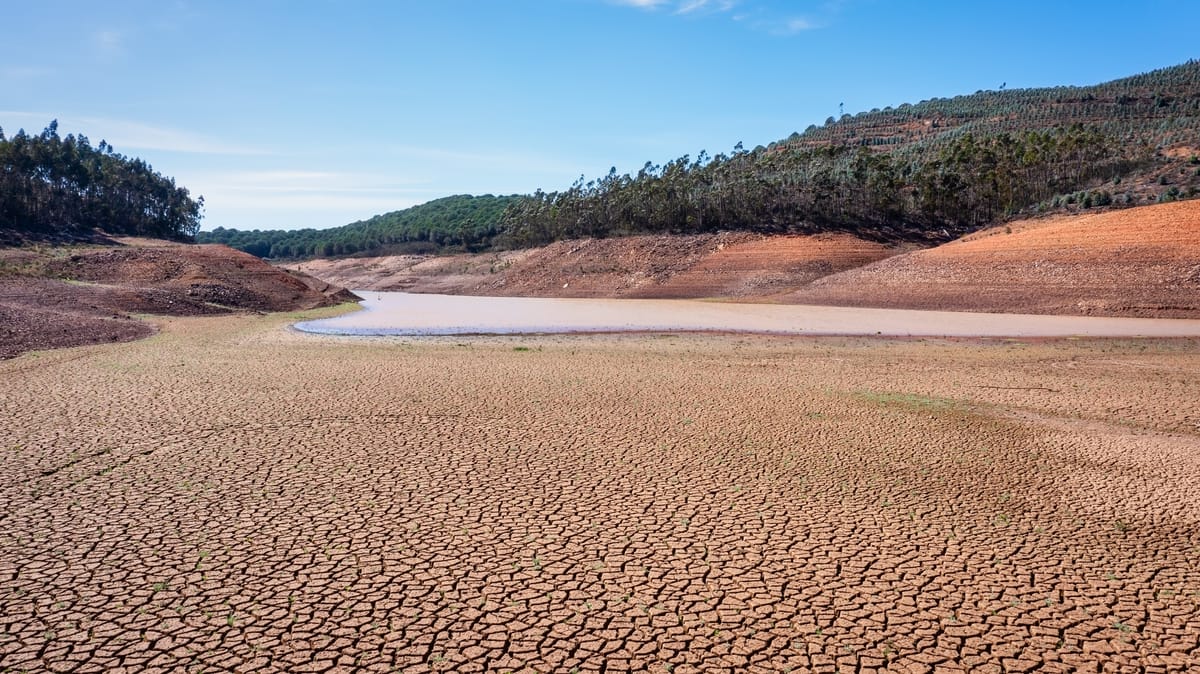
These figures are more than statistics, they reflect a structural shift in how climate risk manifests across Europe. Heatwaves reduce productivity and strain energy systems, droughts disrupt agriculture and water supply, floods damage transport and urban infrastructure. The effects propagate through interconnected systems daily, creating compound risks that static assessments struggle to capture.
This is the gap Predicterra was built to address.
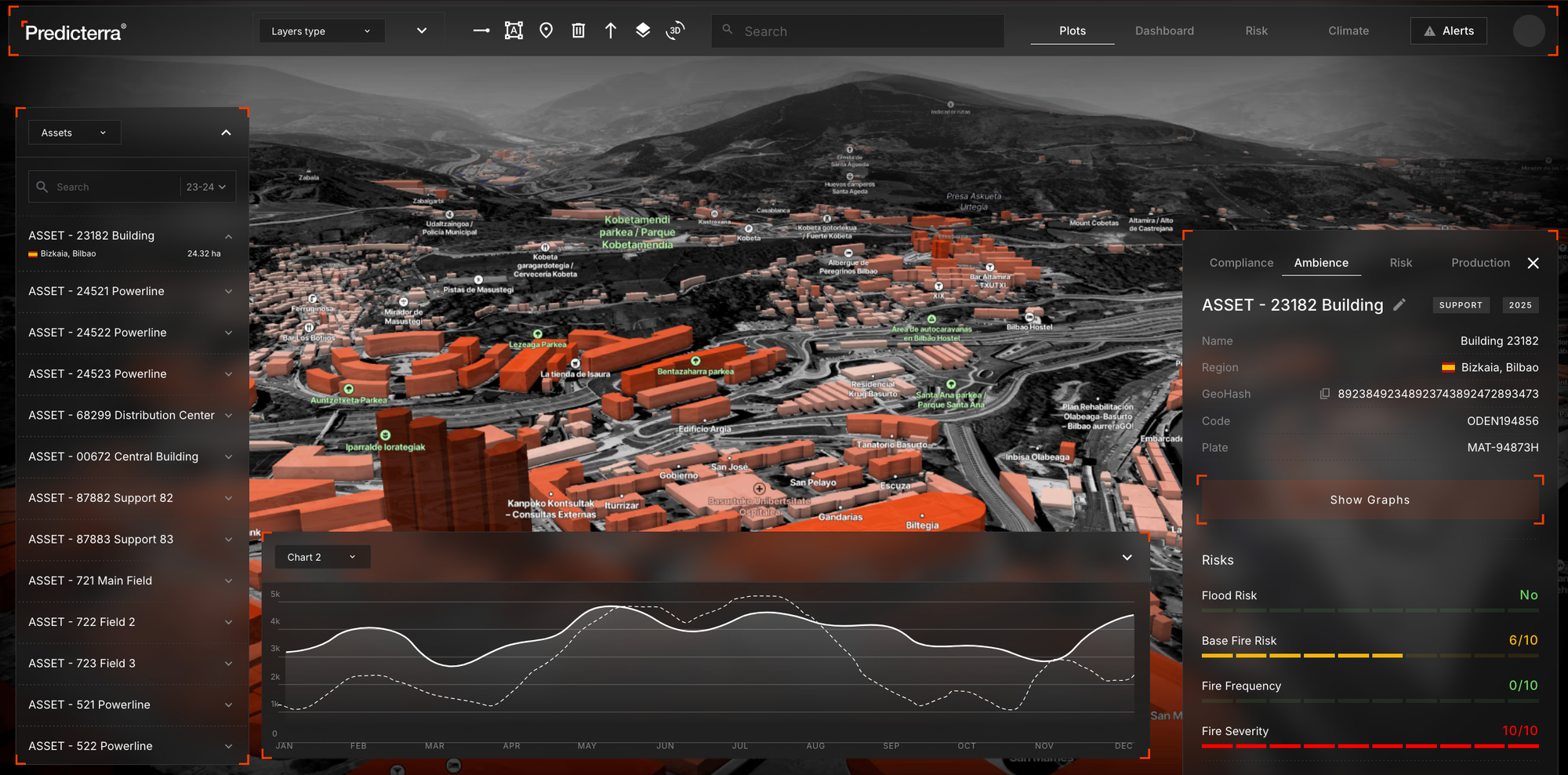
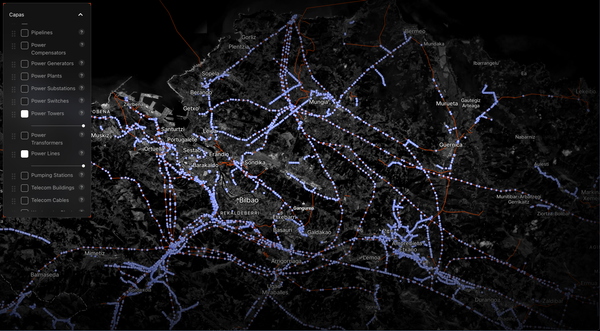
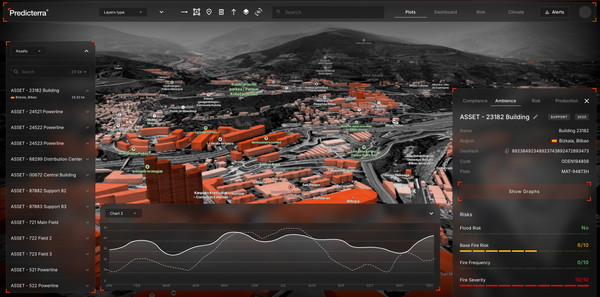
Predicterra is now operating as a climate risk intelligence system designed for real world decision environments. Its purpose is not to explain climate dynamics in isolation, but to translate them into live, structured intelligence that can be acted upon as conditions change. The system delivers real time climate risk insights across more than 190 countries, with deployed models for wildfire and flood risk running at global scale while retaining regional and local resolution.
The innovation here is not a single model or dataset, it is the shift from climate analysis as a descriptive layer to climate intelligence as an embedded operational capability. Predicterra was engineered around the kinds of questions operators actually face, where risk is accumulating right now, how it is evolving over time, and which assets or populations are exposed, not in aggregate but causally and spatially.
To do this, Predicterra is built on a new class of intelligence systems that combine large scale climate data, geospatial reasoning, and spatial AI with foundational models designed for the physical world. Unlike task specific models tuned for narrow predictions, these foundational models are designed to encode structure, learn across domains, and improve through deployment. Their performance is not proven in benchmarks alone, but in how well they hold up under real operational pressure.

This distinction matters. Many climate tools excel in controlled analytical settings but degrade when exposed to incomplete data, shifting baselines, and real time constraints. Predicterra is explicitly designed for those conditions. It operates continuously, under uncertainty, and in environments where decisions cannot wait for perfect information. In that sense, it is less a product and more an operational system, one that assumes sustained use rather than episodic consultation.
The result is a change in how organizations relate to climate risk. Instead of reacting to events after they unfold, operators gain the ability to anticipate how risk is building and propagating across territories and systems. Risk becomes explicit, comparable, and actionable across time horizons. Foresight stops being a strategic aspiration and becomes an operational function.
Equally important is how Predicterra is developed. The system is not validated primarily through simulations or pilots, but through real world deployment. Every operational context becomes a test environment, feeding back into the foundational intelligence layer and strengthening it. This feedback loop, models built to learn from reality rather than abstractions, is central to how Woza approaches intelligence for complex physical systems.
Predicterra is an early but concrete example of this approach. It demonstrates how foundational models for the physical world can be translated into systems that govern real conditions, not just describe them. As climate pressure becomes a permanent feature of global operations, this kind of intelligence may become less exceptional and more necessary.
The broader implication is a shift in how complex risks are managed. When intelligence is engineered to operate inside reality, continuously, adaptively, and under consequence, the boundary between analysis and action begins to dissolve. Climate risk stops being an external variable and becomes something that can be actively governed.
That is the change Predicterra represents, not a better map of the future, but a new way of operating in it.
If climate volatility is already shaping your operational decisions, you can explore the system and its underlying intelligence here.