News/ /8 min read
Woza Labs × Moeve: The Physical Economy Needs a Source of Truth
Woza Labs worked inside Moeve’s renewable fuels sourcing operation to change that, fusing ISCC certification, physical observation, jurisdictional risk and market data into a single model of the world.

One year inside Moeve's renewable fuels sourcing operation. What we showed at the Moeve light Up Demo Day
The energy transition is a materials problem before it is an energy problem.
Every liter of advanced biofuel is a claim about the physical world: that a residue was generated in a specific place, processed in a specific facility, moved through a specific chain of custody, under a specific regulatory regime. The industry verifies those claims almost entirely in the digital world, through certificates, declarations and registries. The physical world, where the claim is either true or false, is rarely consulted.
A certificate records that someone, at some point, asserted something and an auditor accepted it. It does not record that it happened.
The physical economy has records. It does not have a source of truth.
Woza Labs exists to build that source of truth.
We build deep tech for the physical economy. We work at the boundary between the physical and the digital, fusing what is declared with what is observed, so that decisions about physical assets are grounded in physical reality. It is one of the most consequential problems technology can work on today.
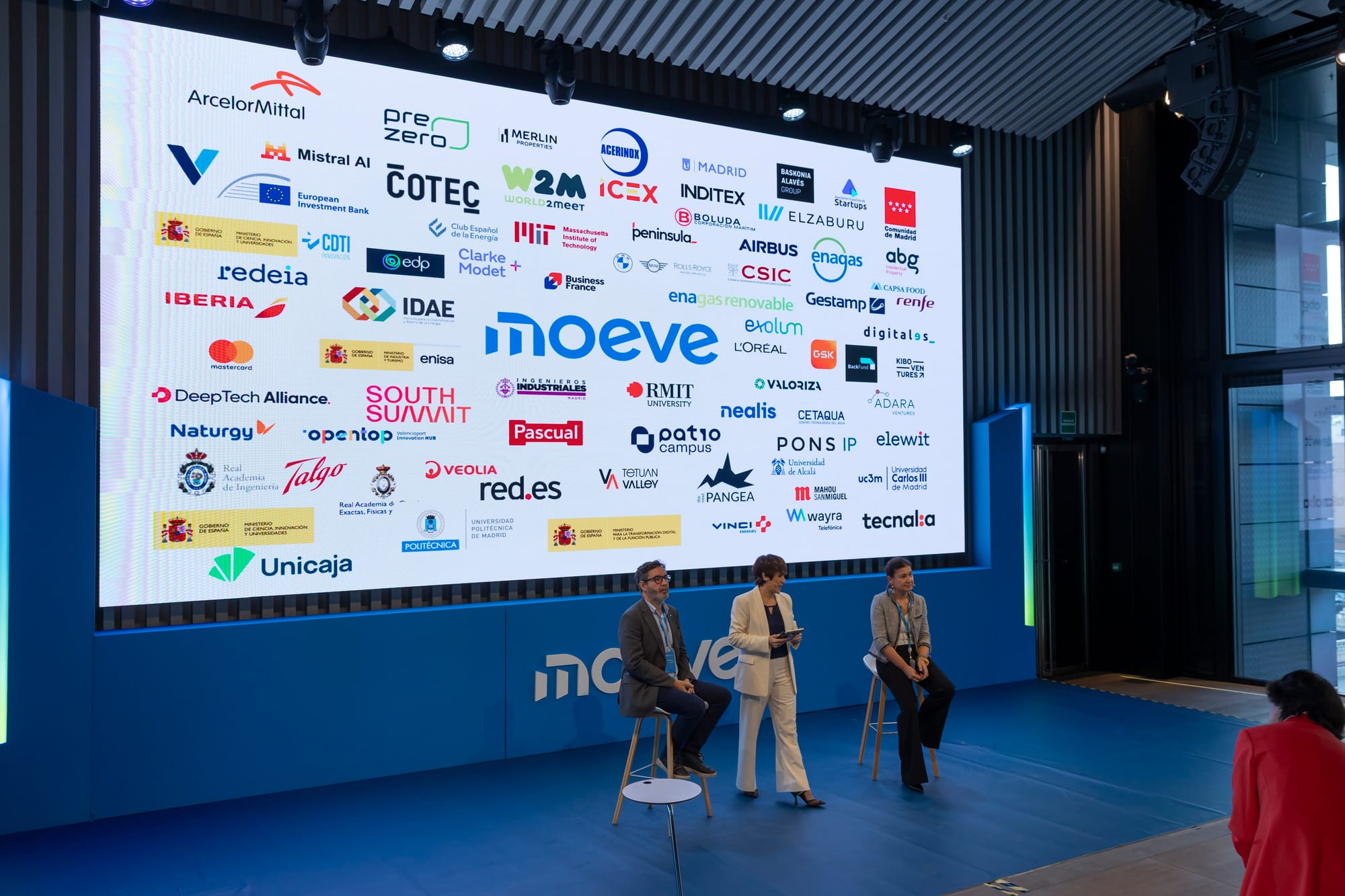
Moeve light Up, Moeve's corporate accelerator, put that capability to work inside the sourcing operation of a major European energy company. Its first open call, in March 2025, received more than 500 applications. Ten companies were selected to build pilots with Moeve's business units over one year. On October 7, at Moeve's headquarters in Madrid, we showed what is now possible.
The problem, stated precisely
Moeve's 2030 Positive Motion strategy commits the company to green molecules and second-generation biofuels at industrial scale. That implies sourcing waste and residue-based feedstocks across many jurisdictions, from a long tail of counterparties, under certification and regulatory frameworks that are among the most demanding in any commodity market.
The risk attached to a single sourcing decision is not one variable. It is a joint function of:
- the counterparty: identity, certification status, scope, history;
- the origin: what the physical evidence makes plausible about where and how the material was produced;
- the jurisdiction: governance, sanctions exposure, financial integrity, regulatory alignment;
- the market: price, freight and policy signals at the moment of commitment;
- time: all of the above evolve, and a decision that was sound last quarter may not be sound today.
Conventional procurement stacks evaluate these dimensions separately, in different systems owned by different teams. Each one can be locally correct while the decision is globally wrong. Fraud, double counting and compliance failures in this market rarely live in a single dimension. They live in the inconsistencies between them, and above all in the inconsistency between the record and the world.
The easy answer would have been another dashboard. Moeve asked for something harder: a system that reasons over the whole function at once, across scouting, origination, certification and transaction, conditioned on the actual state of the world.
We built it.
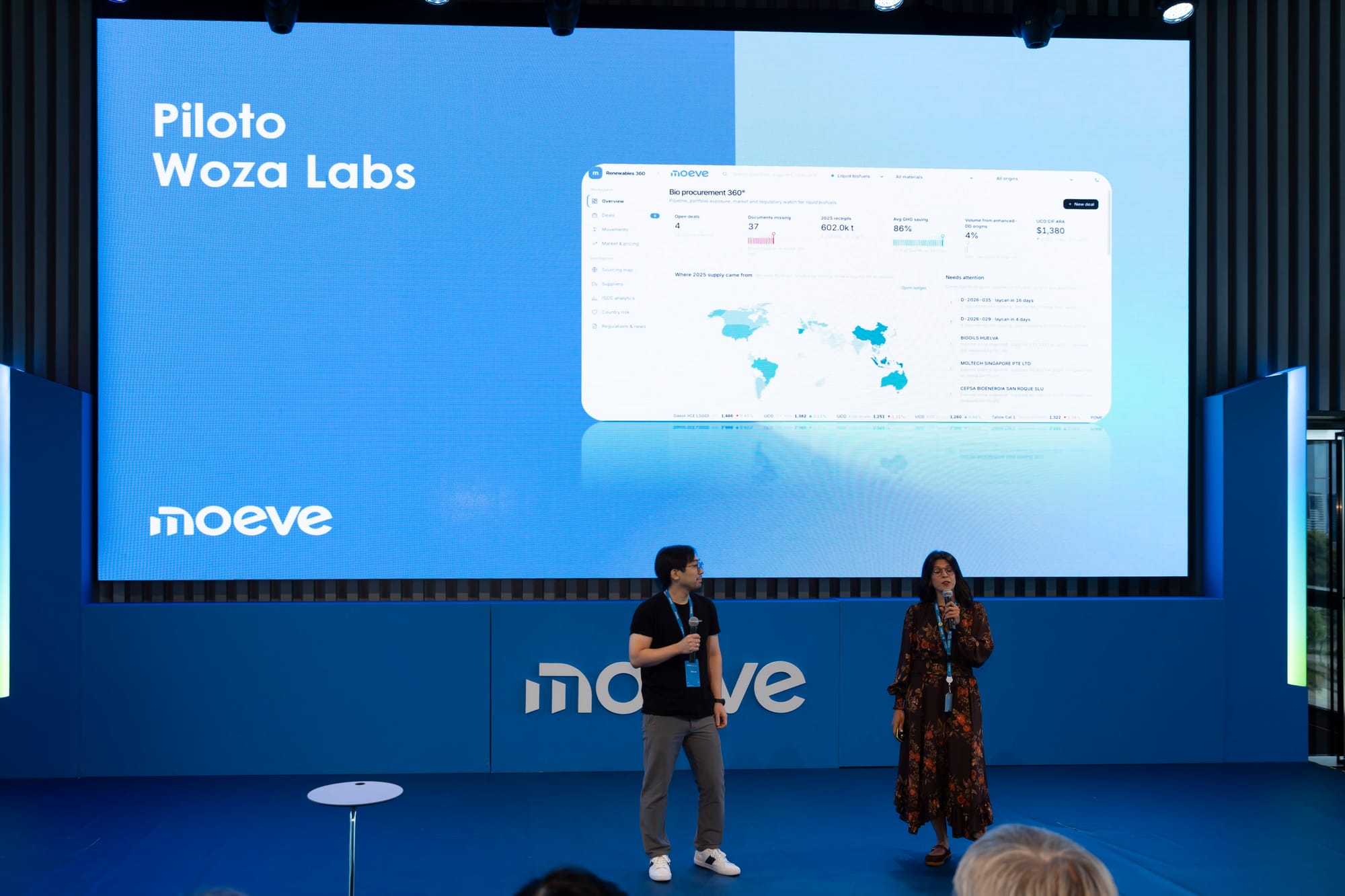
Architecture: one model of the world
What Woza Labs delivered is built on data fusion. Heterogeneous sources (registries, certificates, physical observation, regulatory texts, market signals) are resolved into a single ontology in which every supplier, site, certificate, origin claim, jurisdiction and deal is a typed object, anchored in place and time and linked to everything it depends on.
Every object carries two states: what has been declared about it and what has been observed. The distance between them is computed, never assumed.
No view in the system holds its own version of the truth. Every screen is a projection of the same underlying model through one control, a Material × Origin lens.
| Layer | Fused sources | What the system resolves |
|---|---|---|
| Counterparty | ISCC registry, ~86,000 certificates, resolved into an entity graph | Validity windows, suspensions and withdrawals, scope against the material offered, inconsistencies across linked entities and sites |
| Origin | Multi-temporal physical observation of land use and production activity, cross-referenced with declared origin and volumes | Physical plausibility of each claim; traceability evidence to regulatory standard where required |
| Jurisdiction | FATF lists, governance and stability indicators, applicable EU and national regulation | Country and counterparty exposure on a single calibrated risk scale |
| Market | Fuel, gas and carbon reference prices, freight dynamics | Economic context attached to each opportunity at the point of decision |
| Decision | All of the above | A deal object that carries its full evidentiary record from first contact to purchase order |
Three design decisions are worth explaining.
Claims are tested against the world. An ISCC certificate is a digital artifact: a record that, at a given moment, a set of declarations was accepted. Whether the supply chain behind it exists, at the declared scale, is a physical fact. Our technology treats every certificate, declaration and registry entry as a hypothesis and tests it against independent observation of the physical world: what is produced at the declared origin, how activity there has evolved over time, whether declared volumes are physically attainable. Where the record and the world agree, the claim is corroborated. Where they diverge, the divergence is the signal. It is the same capability we apply in agriculture and forestry, where the gap between what is reported and what exists is equally consequential.
Certificates are claims. Physics is evidence.
The decision carries its evidence. Scouting, vetting and execution are a single flow. The evidentiary context assembled at origination is attached to the deal object and travels with it to the order. Every commitment is reproducible: what was known, from which source, at what time. When a regulator, an auditor or a board asks why a decision was made, the answer is not a recollection. It is a record.
One model, several energy vectors. The same architecture covers liquid biofuels, biomethane and RFNBOs. For RFNBOs, the EU criteria on additionality and on temporal and geographic correlation are encoded as executable logic, so compliance is evaluated deterministically and returned as an explicit verdict with the specific conditions that fail.
Principles
Evidence over assertion. Documents are hypotheses, not conclusions. No claim is accepted on the authority of the paper it is written on. The system reconciles declared facts with observed facts and surfaces every point where they diverge.
Uncertainty is a first-class object. Every value carries its provenance and its epistemic status. Observed, derived, modelled and indicative data are never presented as equivalent. Technology that hides its uncertainty is not sophisticated. It is dangerous. In a market where a wrong answer is a compliance event, the confidence attached to a number matters as much as the number.
Place and time are not metadata. Risk is a property of a physical asset over an interval, not a static attribute of a supplier record. Our data infrastructure is designed to fuse multi-temporal observations at continental scale, the same foundation that supports our physical climate risk work on energy assets.
We own our technology. We chose not to assemble the platform from licensed corporate suites. A company that rents the core of its capability does not control its future, and neither do its clients. Building our own technology from first principles is what allows us to fuse physical observation, registry data, regulatory logic and market signals into a single model, and to extend it when a client asks a question that no off-the-shelf product was designed to answer.
Complexity belongs to the system, not the operator. Procurement and trading teams should receive decisions they can act on and defend, not raw model output. The scientific depth sits underneath; the interface exposes it only where human judgment is required.
Why this matters
Finance has ledgers. Software has version control. The physical economy (energy, agriculture, forestry, materials, infrastructure) has paperwork. Its assets exist in the real world and are managed almost entirely through digital proxies, and every gap between the two is a source of risk, inefficiency or fraud.
A source of truth for physical assets cannot be one more document. It has to be anchored in the physical world itself and continuously reconciled with every record that describes it. That is what data fusion, done with scientific rigor, makes possible, and it is what Woza Labs makes possible today, with real operators and real data, not in a research roadmap.
Europe has written some of the most ambitious decarbonization and supply chain integrity rules in the world. Rules are only as strong as the ability to verify them.
The capability to verify, at scale, what is actually happening to physical assets thousands of kilometers away is becoming critical infrastructure. It will be as fundamental to the physical economy as financial auditing is to capital markets. Whoever builds it on first principles, with real scientific depth and full ownership of the technology, will define the standard.
Woza Labs is building it. Across agriculture, forestry, climate risk and now renewable fuels, the same technology does the same thing: it makes the physical economy verifiable.
Demo Day
Fernando Tadakuma, co-founder and Chief Data Officer of Woza Labs, presented the pilot to Moeve's business units and to the broader innovation ecosystem. He traced a single feedstock decision live: from the certificate, to the physical evidence behind it, to the purchase order. A year ago, that chain of verification did not exist in one system. Now it does.
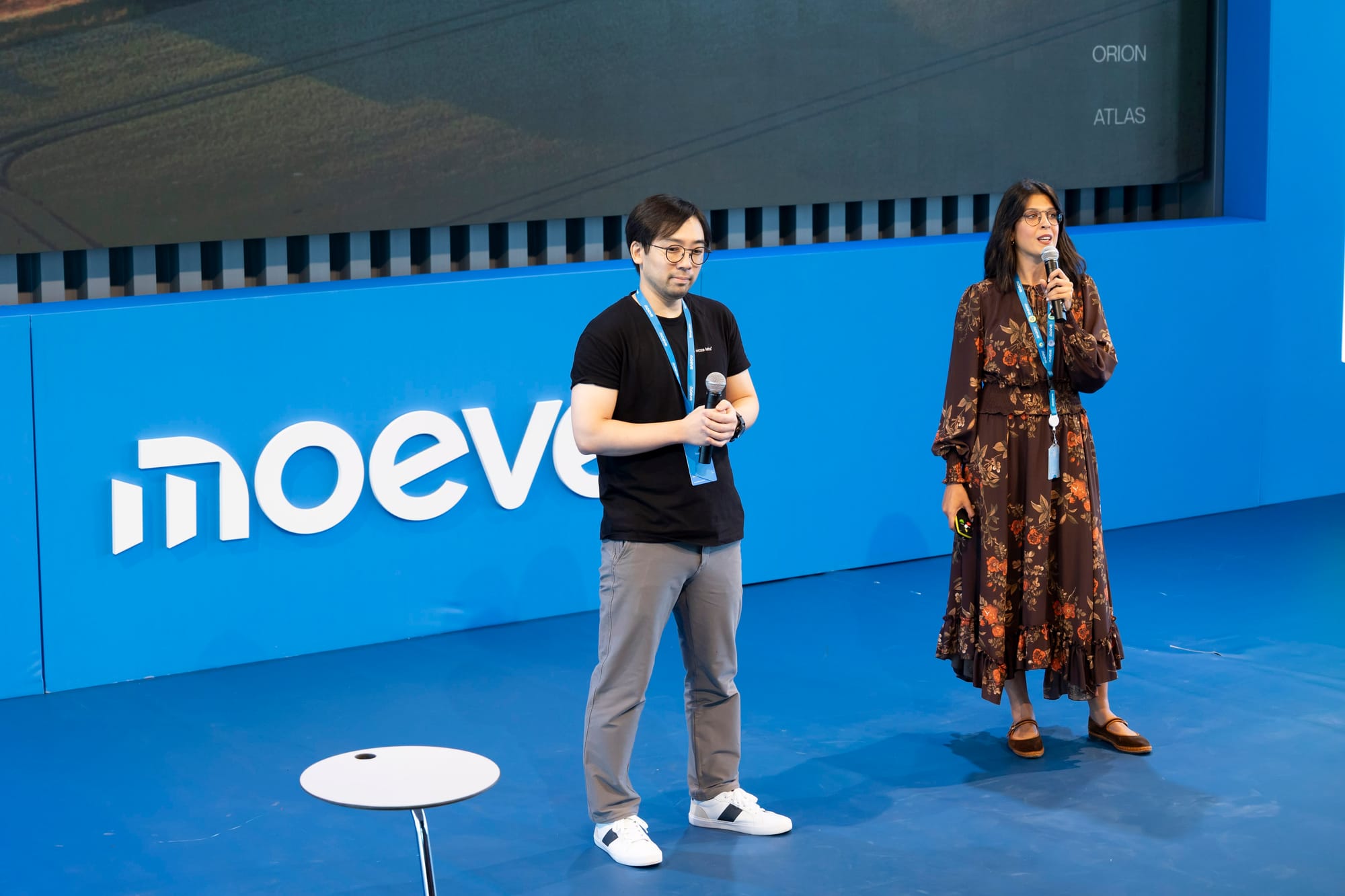
The cohort spanned green ammonia catalysis, algae and plant cell feedstocks, industrial water recovery, agrivoltaics and applied AI. Different technologies, one shared premise: the transition will be decided by the seriousness of the underlying science, not by the quality of the pitch.
Next
Moeve has stated that, according to each solution's maturity, projects will either advance with its business and corporate areas or continue development with its Innovation team, and that a second edition of the accelerator is already being designed.
None of this happens without operators willing to go first.
Industries do not change because a startup has a better idea. They change when an incumbent with real assets, real data and real exposure decides to bet on a new technology before it is obvious, and puts its own operations on the line to prove it. That decision is rarer than it should be, and it is the only way hard problems in the physical economy actually get solved.
Moeve made that bet. It opened its sourcing operation to new technology, with its teams, its data and its decisions, and treated the pilot as a test of how the business should work, not as an innovation exercise. That is what the energy transition demands of every major operator: to act as a pioneer, not a spectator. The industry will need many more companies willing to do the same.
Our thesis has not changed since we started Woza Labs. The decisive risks of the energy transition are physical. They exist in specific places, along specific routes, under specific jurisdictions, at specific moments, and they are invisible to systems that only read documents. Managing them requires a source of truth that fuses the physical and the digital into one coherent picture, and the scientific discipline to know what that picture actually shows. That is what we build, and the Moeve pilot is proof that it works where it matters: inside real operations, on real decisions.
Certificates will keep making claims. Our job is to check them against physics.
Deep tech for the physical economy. That is the work.
We thank the Moeve light Up team and the Moeve professionals who worked with us over the past year.